
When was the last time you checked your spam label in Gmail? Once in a while, a legitimate email can be marked as spam instead of appearing in your Inbox. We recommend you check your spam label periodically for legitimate emails that may appear there by mistake. If you do find a message that has been accidentally marked as spam, you can select it and click Not Spam in the top toolbar to help ensure that future messages from this sender are not flagged as spam. Additionally, adding colleagues to your Google Contacts can help with mail delivery.
U-M Google Updates
Reminder: Check your spam label periodically
New quick settings to change your Gmail layout
Google has announced a new quick settings menu to help you find and use different layouts, settings, and themes to make Gmail look the way you want it.
Note: This update only adds an easier way to access settings that already exist in the full Gmail settings menu. There are no new settings and your existing settings won’t be changed. You can still view the full settings menu by clicking the “See all settings” button at the top of the new quick settings menu.
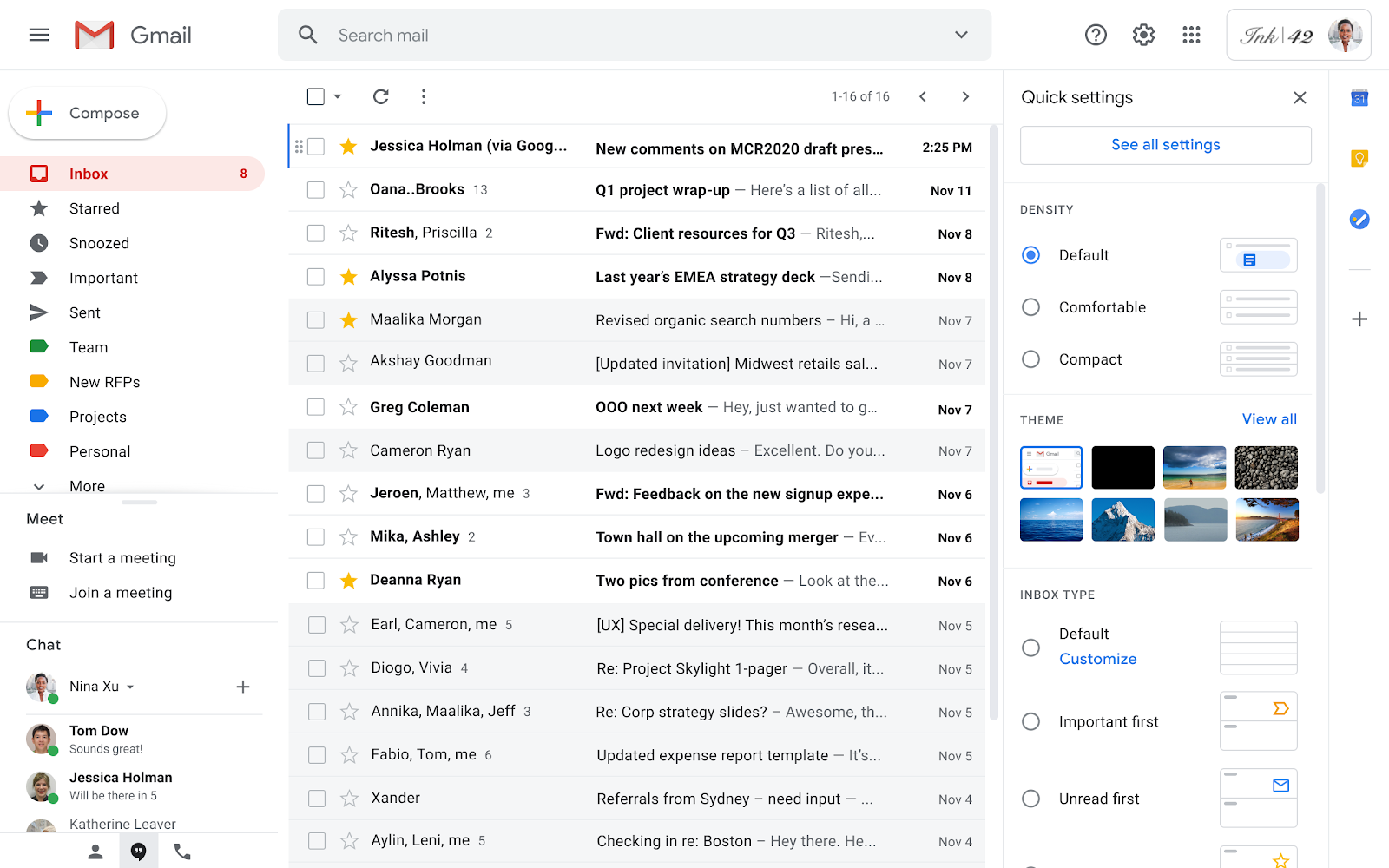
When you click on the Settings gear icon, you’ll now see different interfaces, inbox types, and display options alongside your inbox. When an option is selected, the inbox will instantly update so you can compare choices and see how settings work in real-time.
Gmail has many options to customize layout, look and feel, and other details. These include:
- Changing the density of text and information displayed.
- Choosing a different inbox type to help prioritize and organize emails.
- Adding reading panes to quickly see email contents.
- Applying themes to personalize the look and feel of your inbox.
According to Google, this feature should begin showing up in U-M Google on June 22, 2020, and could take 15 days or longer to become fully visible.
Reminder: Use MCommunity for your out of office notifications
This is a reminder to only use MCommunity for your out of office notifications and not U-M Google Mail’s vacation responder.
The MCommunity Directory and U-M Google Mail both offer out of office/away/vacation message features. However, we strongly recommend the use of MCommunity because it has been specifically designed to work within the U-M computing environment. Using Gmail’s native feature has been known to cause issues with recipients of out of office messages.
The most common known error caused by the use of Gmail’s vacation responder occurs when someone emails an MCommunity group of which you are a member. If you are a member of an MCommunity group and have Gmail’s vacation responder turned on, the individual sending the message to the group will not get your vacation response. An error message will be sent to all owners of that MCommunity group instead. We have no control over this behavior as it is originating from Google. The MCommunity service minimizes these notifications to group owners as it keeps track of who sends you email while you are away and only generates one automated reply to a given sender in a three-day period.
Learn more about the benefits of using MCommunity’s Away Message and how to use it on the ITS documentation page.
New setting to hide Google Meet in Gmail
Google previously announced the ability to start or join a Google Meet session in Gmail. Google has now given you the option to hide this feature in Gmail.
To turn off Google Meet in Gmail:
- Navigate to Gmail.
- In the upper right corner, click the gear icon and then select Settings.
- At the top, select the Chat and Meet tab.
- Next to Meet, select Hide the Meet section in the main menu.
- Click Save Changes.
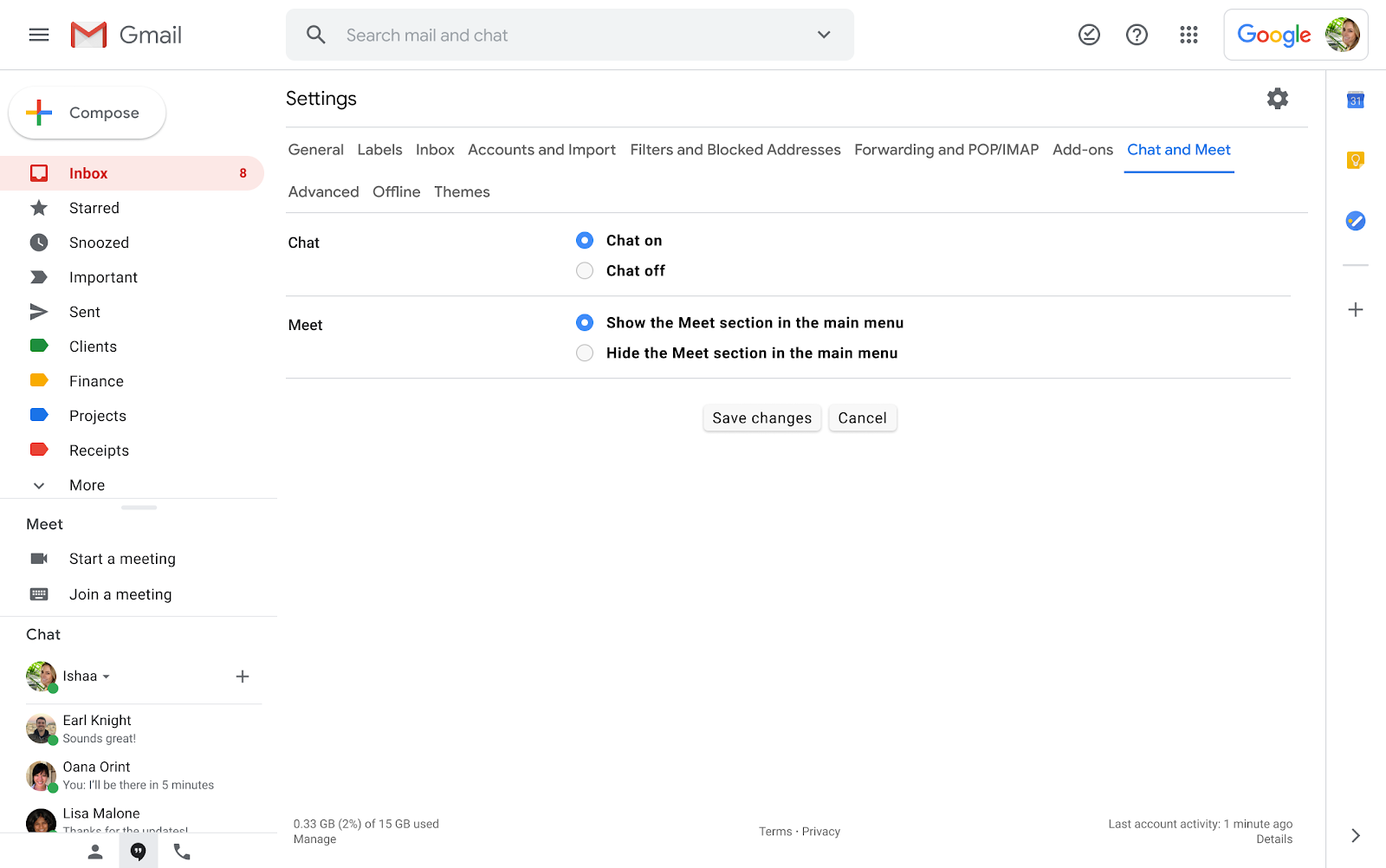
According to Google, this feature began showing up in U-M Google on May 19, 2020, and should be available now.
New Google Docs assistive writing features
Google has announced new assistive writing features that are coming to Google Docs on the web.
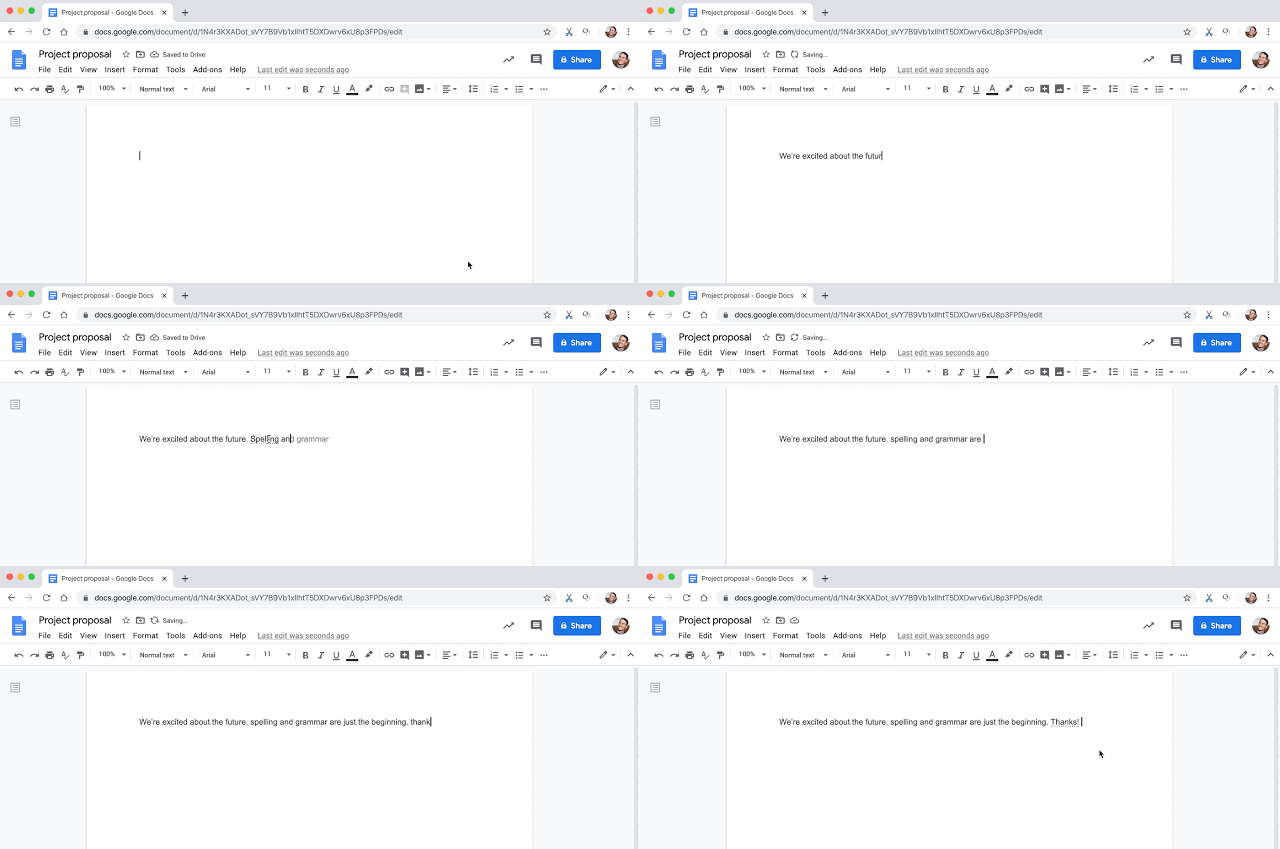
Autocorrect
With Autocorrect, misspelled words will automatically be corrected while typing and denoted with a grey, dashed underline. As you continue typing, this dashed line will disappear. It is currently only available for Google Docs on the web in English. See Correct your spelling & grammar in Google Docs for more information.
Smart Compose
Similar to Smart Compose in Gmail, this feature helps you compose content faster by using machine learning to offer suggestions as you type. It is currently only available for Google Docs on the web in English. See Use Smart Compose in Google Docs for more information.
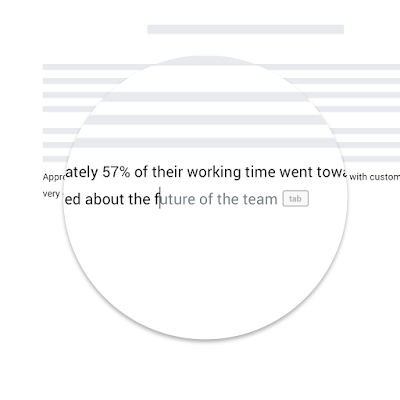
If you would like to disable these features:
- Open a document in Google Docs.
- At the top, select Tools and then select Preferences.
- To turn Smart Compose off, uncheck Show Smart Compose suggestions. To turn Autocorrect off, uncheck Automatically correct spelling. If you would like to turn off additional autocorrection features, uncheck the box beside each feature you want to disable in this menu (e.g., Automatically capitalize words).
- Finally, click Ok. You may need to refresh Google Docs for these changes to take effect.
According to Google, this feature should have begun showing up in U-M Google on June 1, 2020, and could take 15 days or longer to become fully visible.